


Online dating can be a positive way to meet new people, but you’re still getting to know someone you haven’t met before. Taking a few sensible precautions can help protect your privacy, personal safety and finances while trust develops.
Romance scams remain a serious issue in Australia. More than $28.6 million in romance scam losses was reported to Scamwatch during 2025, affecting 1,330 Australians. Many of these losses followed initial contact through online channels, including social media, dating platforms and online forums.
But online dating safety isn’t only about scams.
It’s also about deciding what information to share, recognising pressure, keeping control of how quickly a connection develops and planning a safer first meeting.
RSVP has been helping Australian singles connect since 1997. Whether you’re trying online dating for the first time or returning after divorce, separation, bereavement or a long break, these practical online dating safety tips can help you approach new connections with greater confidence.
Quick Online Dating Safety Tips
Before getting into the details, keep these basics in mind:
- Keep early conversations on RSVP while you’re getting to know someone.
- Avoid sharing your exact home address, workplace or sensitive personal information too early.
- Check what your profile photos reveal in the background.
- Use verification as an additional signal, not a guarantee.
- Never send money, cryptocurrency or gift cards to someone you only know through dating.
- Be cautious about investment opportunities introduced by a new romantic interest.
- Pay attention to repeated inconsistencies or excuses about meeting.
- Tell someone you trust when and where you’re meeting a new date.
- Meet in a public place and arrange your own transport.
- Leave if somebody ignores your boundaries or makes you uncomfortable.
- Use RSVP’s reporting and blocking tools when necessary.
- Contact your bank promptly if you’ve sent money to someone you suspect may be a scammer.
Is Online Dating Safe?
Online dating involves meeting people you don’t yet know, so some risks exist.
These may include:
- Fake or misleading profiles.
- Romance scams.
- Unwanted contact.
- Privacy breaches.
- Harassment.
- Financial manipulation.
- Unsafe behaviour when meeting in person.
That doesn’t mean you need to approach every match with suspicion.
A more practical approach is to let trust develop gradually while maintaining reasonable boundaries.
Australia’s eSafety Commissioner recommends considering a dating platform’s privacy, reporting, blocking and verification features and being careful about sharing personal information or moving conversations away from the platform too quickly.
Safety doesn’t require removing all uncertainty from dating.
It means keeping enough control to make informed decisions as you learn more about somebody.
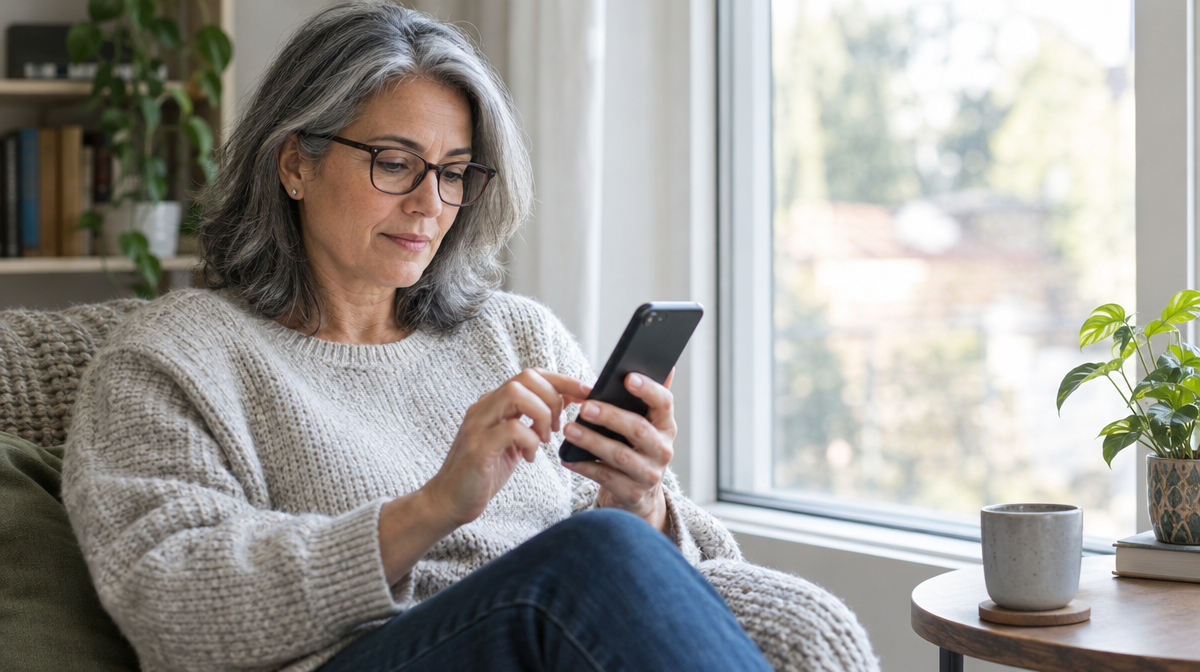
Protect Your Personal Information
You don’t need to tell somebody everything about yourself as soon as you match.
Early conversations should give you enough information to decide whether you enjoy talking without exposing details that could compromise your privacy.
Avoid Sharing Sensitive Details Too Early
Be cautious about sharing:
- Your exact home address.
- Your full legal name.
- Your workplace or exact work location.
- Details of your daily routine.
- Banking information.
- Salary or detailed financial circumstances.
- Medicare information.
- Driver licence details.
- Passport information.
- myGov login details.
- Passwords or account credentials.
- Children’s schools or other identifying information.
You can gradually share more as a genuine relationship develops.
The fact that someone asks a question doesn’t mean you have to answer immediately.
What Is Safe to Share on Your Dating Profile?
Your dating profile should help people understand who you are without giving strangers enough information to easily identify where you live, work or spend your time.
You might be comfortable sharing:
- Your first name.
- General location.
- Interests.
- Hobbies.
- Lifestyle preferences.
- What kind of relationship you’re looking for.
- Recent photographs.
Before publishing your profile, look at it from a stranger’s perspective.
Ask:
“Could somebody use this information to work out exactly where I live, work or regularly spend time?”
If the answer is yes, consider removing some detail.
Check What Your Dating Photos Reveal
Photographs can unintentionally reveal more information than the person uploading them realises.
Before adding a photo, check whether the background clearly shows:
- Your street address.
- House number.
- A street sign close to your home.
- Your car registration plate.
- Your workplace.
- Documents containing personal information.
- A child’s school name.
- Another identifying detail you would prefer to keep private.
You don’t need a complicated privacy routine.
A quick visual check before uploading each photograph can prevent accidental oversharing.
Keep Early Conversations on RSVP
There is no need to immediately give somebody your phone number, email address or social media accounts.
Keeping early conversations on RSVP can:
- Give you more control over the information you share.
- Keep communication within the platform while trust develops.
- Allow you to use reporting and blocking tools if necessary.
- Give you more time to decide whether you want to share other contact details.
Moving to another messaging service isn’t automatically unsafe.
The concern is pressure.
If somebody repeatedly insists that you move to WhatsApp, social media or another service after you’ve said you’d prefer to stay on RSVP, pay attention to how they respond to that boundary.
When Should You Share Your Phone Number?
There isn’t a fixed number of messages, days or dates after which you should exchange numbers.
Share your phone number when you feel comfortable.
You might decide to exchange numbers before meeting. You might prefer to wait until after the first date.
Either approach is reasonable.
What’s more important is whether the other person respects your decision.
Someone who repeatedly pushes for personal contact information after you’ve said no is showing you something about how they handle boundaries.
Use RSVP’s Safety and Verification Features
Dating platforms can provide tools that give members greater control over their experience.
On RSVP, these include features such as:
- Photo Verification.
- Profile moderation.
- In-platform messaging.
- Reporting.
- Blocking.
- Customer Support and Safety review.
Familiarising yourself with these features before you need them can make it easier to respond if an interaction becomes uncomfortable.
What Does RSVP Photo Verification Mean?
RSVP’s Photo Verification uses a video selfie check to help confirm that a member is the person shown in their profile photograph.
A verification indicator can therefore provide an additional authenticity signal.
However, verification doesn’t guarantee:
- Somebody’s intentions.
- Their future behaviour.
- Everything they tell you about themselves.
- That you’re compatible.
- That you can ignore other warning signs.
Think of verification as one useful piece of information, not a substitute for getting to know someone gradually.
How Can You Check Whether a Dating Profile Seems Genuine?
You don’t need to investigate every person you match with.
But if something feels inconsistent, a few simple checks may provide more information.
Pay Attention to Consistency
Notice whether important details remain reasonably consistent.
That might include:
- Where they live.
- Their occupation.
- Their age.
- Family information.
- Travel plans.
- Why they can’t meet.
Everyone occasionally forgets a small detail.
Repeated contradictions involving important aspects of somebody’s identity deserve more attention.
Consider a Reverse Image Search
If you’re concerned about a profile photograph, a reverse image search can help you see whether the image appears elsewhere online.
Finding the same photograph under different names or on unrelated profiles is a significant reason for caution.
Not finding anything doesn’t prove the person is genuine.
Treat the result as one piece of information.
Consider a Video Call
A video conversation before meeting may help you feel more comfortable and can indicate whether somebody appears to resemble their profile photographs.
But it isn’t complete identity verification.
A video call doesn’t prove somebody’s:
- Real name.
- Address.
- Intentions.
- Personal circumstances.
Some genuine people may also feel uncomfortable using video.
The greater concern is when somebody repeatedly avoids every reasonable opportunity to video chat or meet while other inconsistencies are also appearing.
Watch How Someone Responds to Your Boundaries
One of the most useful things you can observe during early dating is how somebody responds when you say no or ask to slow down.
For example:
- “I’d rather keep talking here for now.”
- “I’m not comfortable sharing my address yet.”
- “I’d prefer to meet somewhere public.”
- “I’m enjoying getting to know you, but I’d like to take things slowly.”
A respectful person doesn’t have to agree with every preference, but they should be able to accept reasonable boundaries.
Be more cautious if somebody:
- Repeatedly challenges your decisions.
- Tries to make you feel guilty.
- Becomes angry when you say no.
- Tells you that your boundaries prove you don’t trust them.
- Pressures you to share information.
- Pushes the relationship forward faster than you want.
Safety isn’t only about identifying scammers.
It’s also about noticing whether a new person respects your comfort and independence.
Be Cautious When a Relationship Becomes Intense Very Quickly
Some new connections naturally develop quickly.
That isn’t automatically a problem.
However, slow down if somebody you’ve barely met:
- Messages constantly.
- Makes intense declarations of affection.
- Says you’re “the one”.
- Talks about your future together almost immediately.
- Pressures you to become exclusive.
- Encourages you to delete your dating profile.
- Wants the relationship kept secret.
Rapid affection becomes more concerning when combined with other warning signs such as inconsistent stories, repeated excuses about meeting, financial requests or attempts to isolate you.
You don’t need to match somebody else’s pace simply because they’re enthusiastic.
Never Send Money to Someone You Only Know Through Dating
A new romantic connection shouldn’t require financial assistance.
Be extremely cautious if somebody you’ve met online asks for:
- Money.
- Cryptocurrency.
- Gift cards.
- Travel expenses.
- Medical expenses.
- Business funding.
- Money to pay a fee or debt.
- Money so they can come to Australia or finally meet you.
- Help receiving or transferring funds.
The request may come after weeks or months of apparently genuine conversation.
That’s one reason romance scams can be difficult to recognise.
The request may feel as though it’s coming from someone you already know well, even though you’ve never met them.
Be Careful With Investment Opportunities
A financial request may also be disguised as an opportunity.
A new romantic interest might introduce:
- Cryptocurrency.
- Foreign exchange trading.
- An investment platform.
- A business opportunity.
- An “exclusive” investment.
They may tell you they’ve made significant returns and offer to help you do the same.
Treat unsolicited investment advice from somebody you’ve recently met through dating with extreme caution.
Don’t allow romantic trust or emotional pressure to rush a financial decision.
Romance Scam Warning Signs to Know
Because RSVP has a separate detailed guide to identifying romance scams, this safety guide doesn’t need to repeat every scam tactic.
However, common warning signs include:
- Intense affection unusually early.
- Repeated excuses for avoiding video calls or meetings.
- Important parts of their story changing.
- Pressure to move away from RSVP immediately.
- Claims of always being overseas or unavailable.
- Requests for money, cryptocurrency or gift cards.
- Investment opportunities.
- Requests for banking or identity information.
- Pressure to keep the relationship secret.
- Attempts to isolate you from friends or family.
The important point is to look for patterns rather than one isolated behaviour.

Ask Someone You Trust for a Second Opinion
When you’re excited about a new connection, it can be useful to talk about it with somebody you trust.
That could be:
- A close friend.
- A sibling.
- An adult child.
- Another trusted family member.
Someone who isn’t emotionally involved may notice an inconsistency or unusual request that you haven’t considered.
Getting another perspective doesn’t mean handing somebody else control of your dating decisions.
The decision remains yours.

How to Stay Safer When Meeting Someone in Person
Moving from online conversation to a real-world date can be exciting.
A few simple precautions can help you maintain control over the situation.
Choose a Public Place
For a first meeting, choose somewhere with other people around.
For example:
- A café.
- Restaurant.
- Busy bar.
- Shopping or entertainment precinct.
- Another well-populated public location.
Avoid making your home or theirs the location of your first meeting.
Tell Someone Where You’re Going
Before leaving, tell someone you trust:
- Who you’re meeting.
- Where you’re meeting.
- Approximately when you expect the date to finish.
You might also send them the person’s profile or relevant meeting details.
Arrange Your Own Transport
Have your own way to and from the date.
This gives you control over when you arrive and when you leave.
It also means you don’t need to provide your home address so the other person can collect you.
Keep Your Phone Accessible
Make sure your phone is charged before you leave.
Keep it somewhere you can access easily.
Consider a Check-In
Arrange a simple check-in with somebody you trust.
For example:
“I’ll message you around 8:30 to let you know everything is fine.”
It doesn’t need to be elaborate.
The aim is simply for another person to know where you are and expect to hear from you.
You Can Leave a Date at Any Time
Agreeing to meet somebody doesn’t create an obligation to stay.
You can end the date if:
- They become aggressive.
- They ignore your boundaries.
- They pressure you to go somewhere private.
- Their behaviour is dramatically different from your online conversations.
- They make unwanted physical advances.
- They repeatedly make you uncomfortable.
- Something simply feels wrong.
You don’t need to remain because leaving might seem impolite.
Your comfort and safety matter more than completing the date.
Be Careful With Alcohol on a First Date
If alcohol is part of your first meeting, keeping track of what you’re drinking can help you remain aware of your surroundings and make your own decisions about the date.
Practical precautions include:
- Don’t leave your drink unattended.
- Don’t accept a drink if you didn’t see it being prepared or opened.
- Keep enough awareness to arrange your own journey home.
- Don’t let somebody pressure you to drink more than you want.
Choosing not to drink at all is also completely reasonable.
Don’t Rush Into Sharing Your Home Address
A successful first date doesn’t mean you need to immediately reveal where you live.
You can continue meeting in public while you get to know each other.
If somebody offers to collect you for a date and you’d rather meet there independently, you can simply say so.
A respectful match should accept that decision.
What If Someone Is Harassing You Online?
Not every safety issue is a romance scam.
Sometimes a match may continue contacting you after you’ve asked them to stop or may become abusive, threatening or intimidating.
If somebody is harassing you:
- Stop engaging if continuing the conversation is making things worse.
- Use RSVP’s blocking and reporting tools.
- Preserve relevant messages or screenshots where safe.
- Review your privacy settings.
- Check whether you’ve shared contact details that allow them to reach you elsewhere.
- Seek additional support if the behaviour continues across other platforms.
Australia’s eSafety Commissioner provides information and reporting options for serious online abuse, image-based abuse and sexual extortion.
If you are in immediate physical danger in Australia, call Triple Zero (000).
What If Someone Threatens to Share Intimate Images?
Someone may threaten to distribute an intimate image or video unless you send money, provide more images or comply with another demand.
This can be a form of sexual extortion, or sextortion.
If this happens:
- Don’t send additional intimate content.
- Don’t pay the person.
- Stop engaging with their demands.
- Preserve relevant evidence where safe.
- Report the account to the platform.
- Seek support through Australia’s eSafety Commissioner.
Threats involving intimate content can feel extremely personal, but paying doesn’t guarantee the demands will stop.
How to Report Suspicious Behaviour on RSVP
You don’t need to prove somebody is a scammer before reporting behaviour that genuinely concerns you.
Consider reporting a profile if somebody:
- Requests money.
- Sends threatening or abusive messages.
- Appears to be impersonating someone else.
- Repeatedly ignores your boundaries.
- Uses the platform in a way that makes you feel unsafe.
- Engages in behaviour you believe may be fraudulent.
You can also block a member if you no longer want them to contact you through RSVP.
What to Do if You Think You’ve Been Scammed
If you’ve sent money or sensitive personal information to somebody you now suspect may be a scammer, acting quickly can be important.
1. Stop Sending Money
Don’t make another payment because the person creates a new emergency, promises repayment or says one final payment will solve the problem.
2. Contact Your Bank or Payment Provider
If you’ve transferred money, contact your bank or payment provider as soon as possible.
Depending on the payment method and circumstances, they may be able to take action, although recovery isn’t guaranteed.
3. Stop Sharing Personal Information
Don’t provide additional:
- Identity documents.
- Banking details.
- Passwords.
- Verification codes.
- Financial records.
- Intimate images.
Change affected passwords if account credentials have already been disclosed.
4. Preserve Relevant Information Where Safe
Keep useful records such as:
- Messages.
- Profile information.
- Screenshots.
- Payment records.
- Email addresses.
- Phone numbers.
5. Report the Profile to RSVP
Use RSVP’s reporting tools so the account can be reviewed.
6. Report the Scam to Scamwatch
Scamwatch, operated by Australia’s National Anti-Scam Centre, collects reports about scams affecting Australians.
7. Use ReportCyber Where Appropriate
If the incident involves cybercrime, compromised accounts or online fraud, Australia’s ReportCyber service may be appropriate.
8. Contact IDCARE if Identity Information Has Been Compromised
If you’ve shared documents such as your passport, driver licence or Medicare details, IDCARE provides specialist identity and cyber support in Australia.
9. Seek Help if You Feel Threatened or Controlled
If somebody is threatening, blackmailing, controlling or abusing you, prioritise your immediate safety.
In an emergency in Australia, call Triple Zero (000).
1800RESPECT provides support relating to domestic, family and sexual violence.
Frequently Asked Questions About Online Dating Safety
Is It Safe to Use My Real Name on a Dating Profile?
Using your first name can give other members a way to address you without necessarily revealing your full legal identity.
Be cautious about combining your profile with enough information for a stranger to immediately locate your home, workplace or other sensitive details.
Can Someone Work Out My Location From My Dating Photos?
Potentially.
Photos may unintentionally reveal street signs, house numbers, car registration plates, workplace branding or recognisable locations close to your home.
Check the background before uploading photographs.
Is It Safe to Share My Phone Number?
There is no universal stage at which you need to exchange phone numbers.
Share yours when you feel comfortable.
If you’d prefer to continue talking on RSVP, you can do so.
Should I Video Call Someone Before Meeting Them?
You can if it makes you more comfortable.
A video conversation may help you see whether somebody resembles their profile photographs and gives you another opportunity to talk before meeting.
However, a video call doesn’t prove somebody’s identity or intentions.
How Do I Know if a Dating Profile Is Fake?
There isn’t one perfect test.
Look for combinations of warning signs, such as inconsistent stories, photos appearing under other identities, repeated avoidance of meetings, financial requests or pressure to leave the platform.
RSVP Photo Verification can provide an additional authenticity signal, but continue using your own judgement.
Is It Safe to Move a Conversation to WhatsApp?
Moving to WhatsApp or another messaging service isn’t automatically unsafe.
However, it may reveal your phone number and moves the conversation outside RSVP’s messaging environment.
There is no need to move until you’re comfortable.
Should I Tell Someone About My First Date?
Yes, telling a trusted friend or family member where you’re going and who you’re meeting is a sensible precaution.
You can also arrange a check-in during or after the date.
What Should I Do if Someone Asks Me for Money?
Don’t send money, cryptocurrency or gift cards, and don’t receive or transfer money on their behalf.
If you’ve already sent money, contact your bank or payment provider promptly.
What Should I Do if Someone Is Harassing Me?
Block and report the person through RSVP.
Where safe, preserve relevant messages or screenshots.
If the harassment involves threats, stalking, serious online abuse or behaviour continuing across multiple platforms, seek additional support through eSafety or appropriate Australian authorities.
Call 000 if you’re in immediate danger.
Online Dating Safety Is About Giving Trust Time to Develop
Staying safer online doesn’t mean assuming every person you meet has bad intentions.
It means remembering that a profile and a few messages are only the beginning of getting to know someone.
Take your time.
Protect sensitive information.
Keep early conversations on RSVP until you’re comfortable moving elsewhere.
Pay attention to how somebody responds to your boundaries.
Meet publicly and arrange your own transport.
Tell somebody where you’re going.
Never let a new romantic connection pressure you into sending money, transferring funds or making an investment.
And if something doesn’t feel right, slow down, use the available safety tools and ask somebody you trust for another perspective.
RSVP has been helping Australian singles connect since 1997, and practical precautions can help you focus on what online dating is ultimately about: meeting new people and seeing where a genuine connection might lead.
Before starting your next conversation, review RSVP’s Dating Safety Tips and familiarise yourself with the platform’s Photo Verification, reporting and blocking features.
Leave a Reply